Gardening Hackney — Recycling and Sustainability for Greener Gardens
 At Gardening Hackney we are committed to creating an eco-friendly waste disposal area model that works across borough boundaries. Our approach balances practical, local action with measurable goals: we have set a borough-wide recycling percentage target of 60% material diversion by 2030, focusing on organic garden waste, reusable soil, and recyclable garden plastics. This sustainable rubbish gardening area initiative is designed to support community growers, allotments and small landscaping projects with clear, achievable outcomes.
Our strategy recognizes the way the borough approaches waste separation: the local authority separates household refuse into dry recycling, green food and garden waste, and residual waste streams, and we align garden waste collection with those systems. By cooperating with existing collections we reduce contamination and improve recovery rates. We encourage residents and community groups to use correctly labelled bags and bins to feed the circular system and increase the reuse of soil, compost and plant materials.
 To make the recycling offer tangible, we operate designated drop-off points and promote nearby local transfer stations and household recycling centres that accept garden materials. These include council-run transfer facilities and eco-parks in neighbouring boroughs, which process green waste and prepare it for composting or anaerobic digestion. Partnering with transfer stations cuts transport emissions and streamlines the path from garden waste to reclaimed compost and soil conditioner.
How the sustainable rubbish gardening area works in practice
At the heart of our model is a series of simple steps for community projects: sort, separate and redirect. We advocate for visible sorting areas in community gardens — clearly marked bins for wood, green waste, soil, plastics and metals — so gardeners encounter an on-site eco-friendly waste disposal area culture. These separation points reduce cross-contamination and increase the proportion of materials that can be reused. Separation is key — when materials are well sorted, local transfer stations can process them more efficiently.
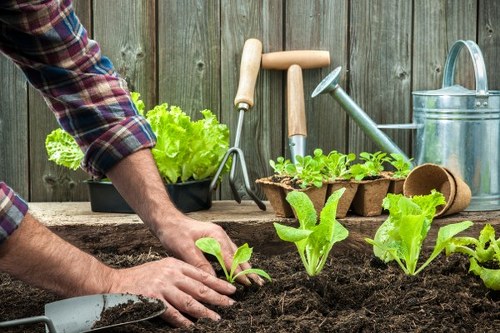 We also work with social enterprises and charities to create pathways for reuse. Local partnerships help to collect working tools, planters and excess compost for redistribution rather than disposal. Strong collaborations with charity partners and community organisations ensure materials that are still usable — soil, pots, paving stones, hand tools — get a second life, supporting local projects and reducing landfill. This complements council recycling streams and feeds into the borough’s broader recycling targets.
Simple infrastructure and training are essential. We provide signage templates and modular sorting stations that fit community allotments or small public gardens. These low-cost physical changes, combined with volunteer coordination, make the sustainable gardening rubbish area effective even in constrained urban spaces.
Fleet, logistics and charity partnerships to lower carbon impact
To reduce the carbon footprint of garden waste transport we are investing in a fleet of low-carbon vans and alternative delivery options. Our plan includes electric vans for local collections, hybrid vehicles for medium-range transfers, and cargo e-bikes for dense neighbourhood collections. These choices cut emissions and noise, making the eco-friendly waste disposal area network more accessible and sustainable.
 We coordinate logistics with local transfer stations to optimize routing and reduce double-handling. By syncing small community pickups with scheduled transfer station drop-offs, we avoid unnecessary journeys and maximise load efficiency. This coordination is particularly important for bulky items such as timber, turf and soil, which benefit from direct transfer station processing.
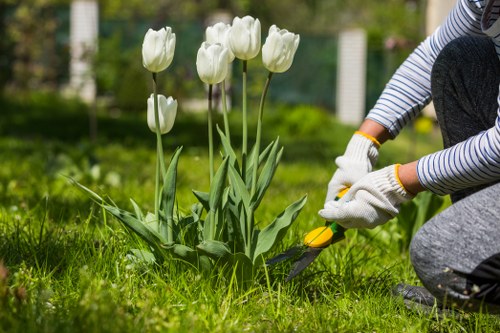 Partnerships with charities and social enterprises form a vital part of the circular loop. We collaborate with local reuse charities to accept donated tools and planters, with composting projects that accept separated green waste, and with social firms that remanufacture wooden pallets and timber into garden benches and raised beds. These collaborations create community benefit while driving down disposal costs and greenhouse gas emissions.
Key activities and recycling streams that support this work include:
- Green waste composting: dedicated channels for leaves, grass cuttings and prunings that feed community-scale composting and municipal facilities.
- Soil reuse and testing: salvaging and remediating good-quality topsoil for reuse in raised beds and planters.
- Wood and timber recovery: splitting, drying and reconditioning timber for reuse rather than chipping to waste.
- Plastic pots and trays: separation and recycling streams for rigid garden plastics compatible with borough dry recycling.
- Tool and equipment reuse: directing functioning tools to charity partners instead of disposal.
These activities are designed to align with borough-level waste separation rules and the practical realities of urban gardening. By integrating with council collections for mixed recycling, green waste and residual streams, the sustainable rubbish gardening area complements formal systems rather than duplicating them.
Our commitment is simple: to create resilient local systems that turn garden waste into community resources, reduce transport emissions through low-carbon vans and smart routing, and meet an ambitious recycling target that supports Hackney’s green spaces for years to come. We measure progress through material tonnage diverted, community projects supported, and reductions in vehicle miles. With clear targets, local transfer station partnerships and strong charity link-ups, our eco-conscious approach makes sustainable gardening practical and repeatable across the borough.